
FACTORY & LABORATORY
Materials, processing & supply
Explore measurement principles, sample identification and supply enquiries. Illustrations explain the concepts; confirm current grade specifications and availability with us.
Discuss your material requirements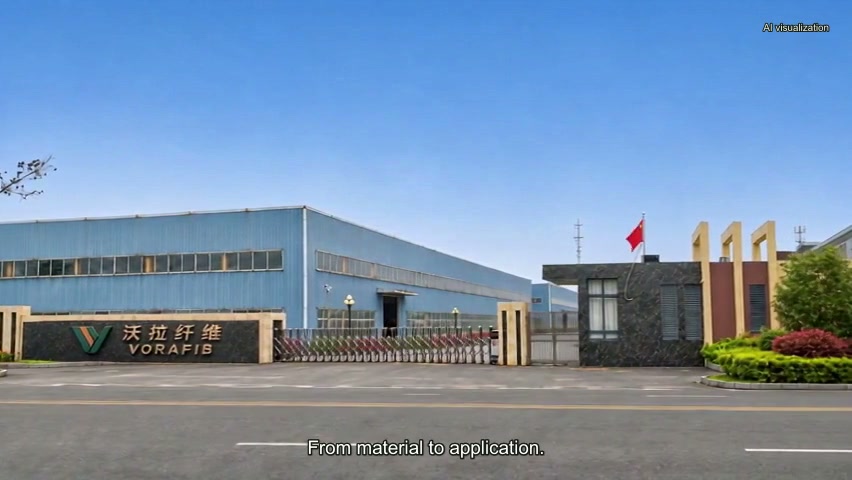
A still from the approved introduction film, including AI visualization.
Company introduction
About VORAFIB
This website is dedicated to our mineral fiber and related materials business, with a separate catalogue and enquiry presentation.
Browse materials, review available technical references, and contact us to discuss your requirements.
MATERIALS / PROCESSING / APPLICATIONS
From material to application.
Watch the 59-second introduction to materials, processing, laboratory review and warehousing.
MEASUREMENT PRINCIPLES
Equipment. Methods. Context.
A visual introduction to the equipment and measurement references. Open the notes for the principle, calculation and conditions behind each test.
Equipment illustration
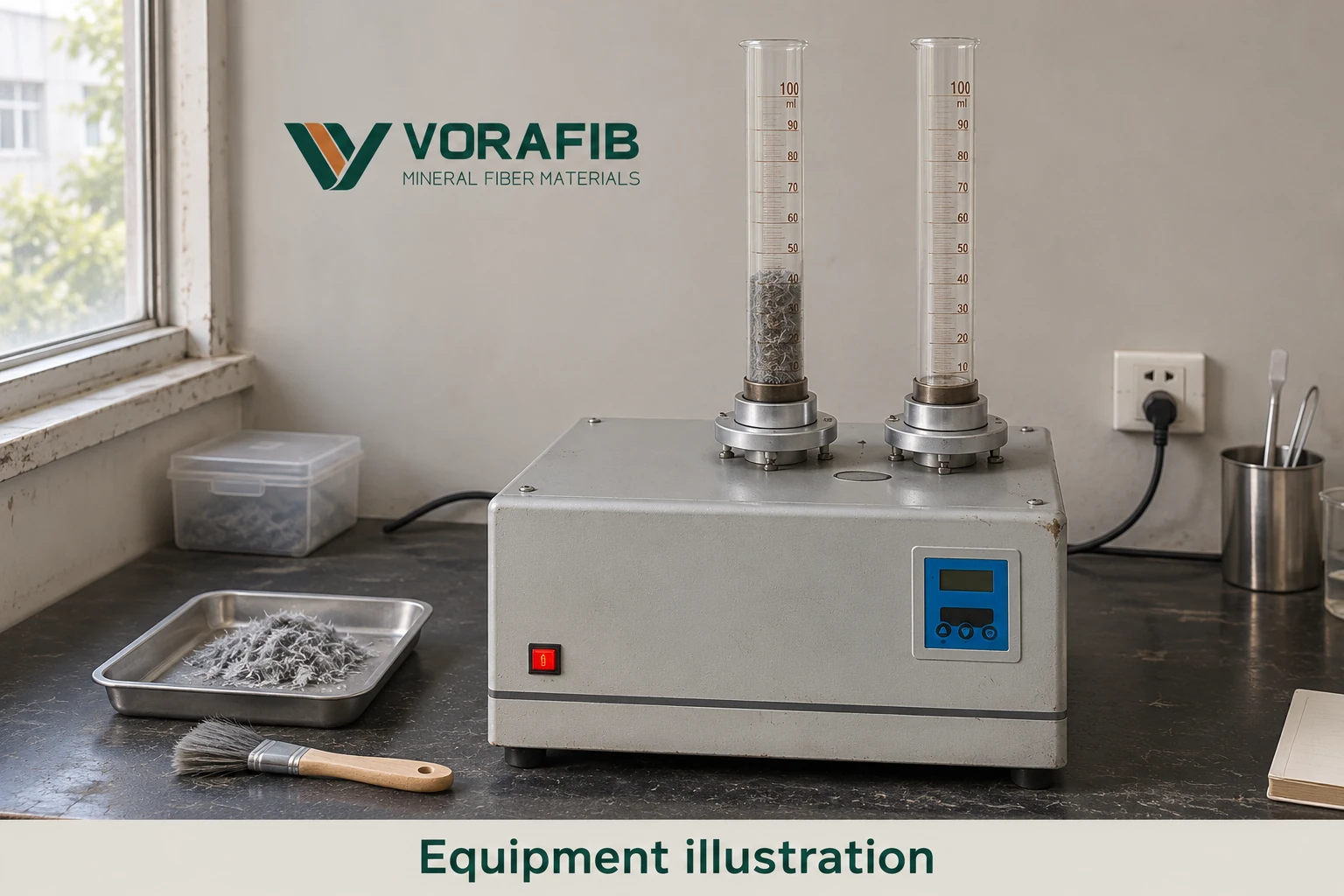
Density testing equipment
An equipment illustration showing how a fiber sample can be measured as it settles.
View illustration ↗Read measurement notes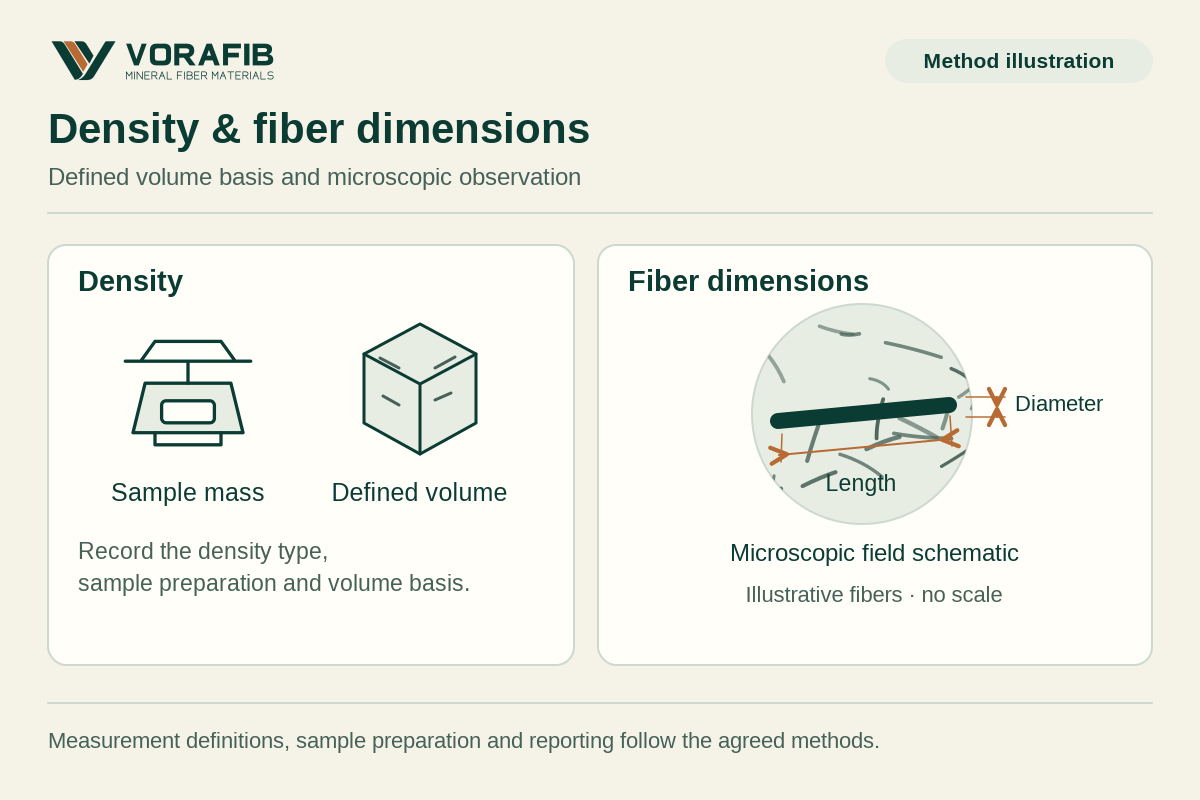
Method illustration
Fiber measurement references
Density, length and diameter methods, with their measurement basis explained.
View illustration ↗Read measurement notes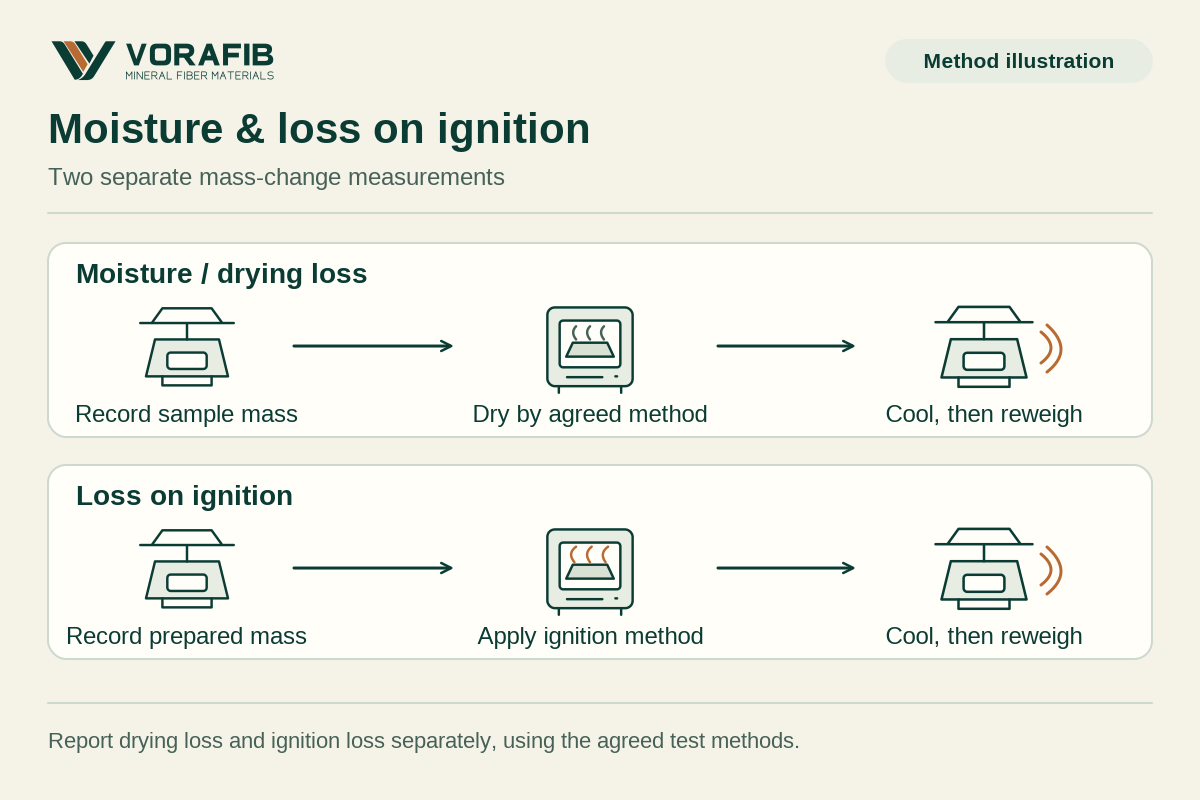
Method illustration
Moisture & ignition loss
Two heating procedures, with different conditions and different meanings.
View illustration ↗Read measurement notes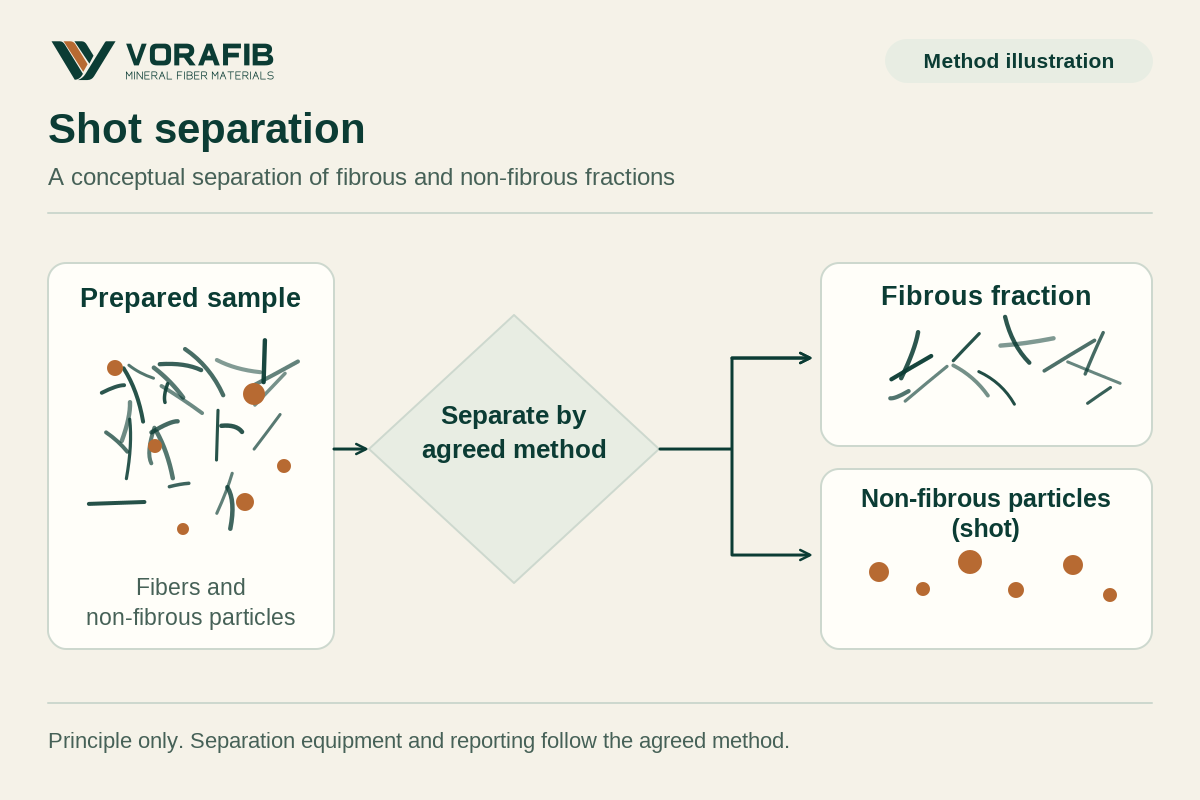
Method illustration
Non-fibrous shot content
Wet separation and sieving, read together with the specified sieve opening.
View illustration ↗Read measurement notesEquipment and method illustrations explain measurement concepts. Confirm the test conditions and reporting basis using current grade datasheets and agreed methods.
STORAGE & DISPATCH
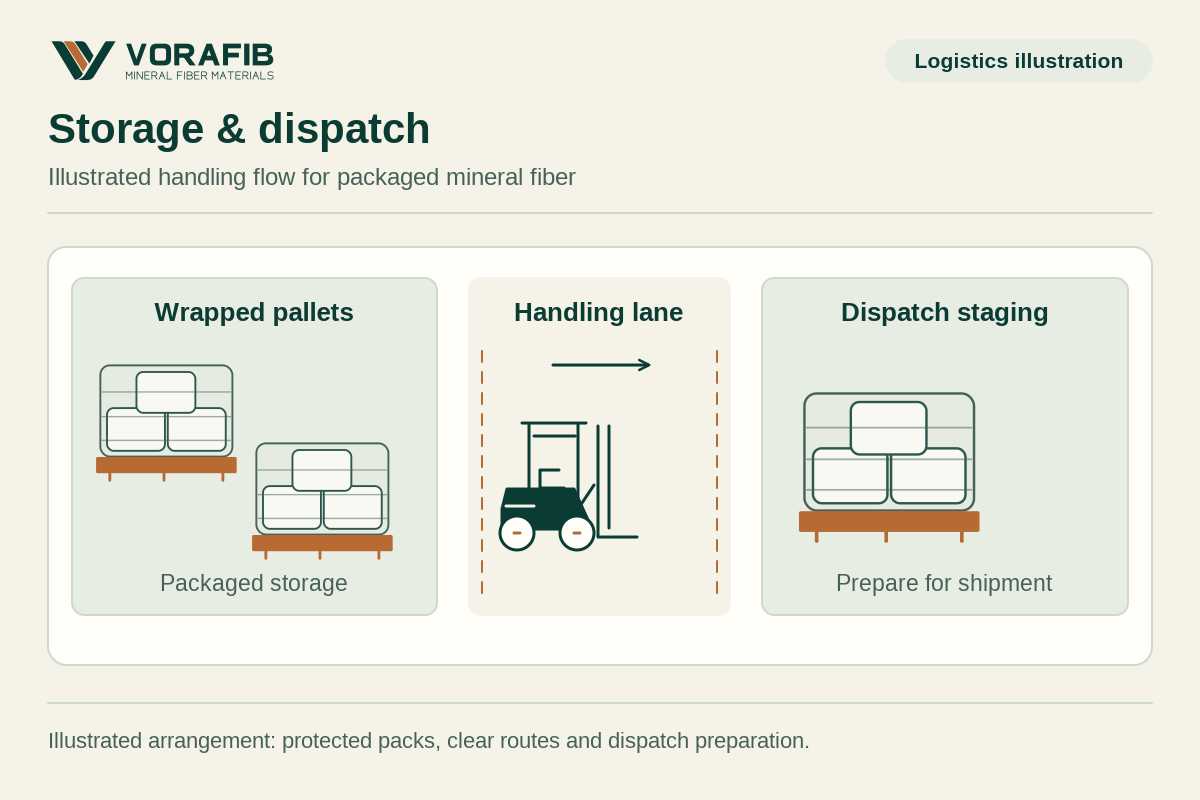
Plan the material journey.
Confirm packing, sample identification and delivery requirements for the selected material.
PACKAGING & SAMPLES
Keep the sample
connected to the data.
Packaging and identification are part of the material enquiry. Confirm the grade designation, sample reference, packing format and required quantity.
For a trial sample or a later delivery, ask for the current datasheet and the agreed batch information. Record any conditioning or preparation changes when comparing results.
Packaging design concepts show the VORAFIB identity. Confirm the available packing format and identification for your selected material.
Discuss a sample or packaging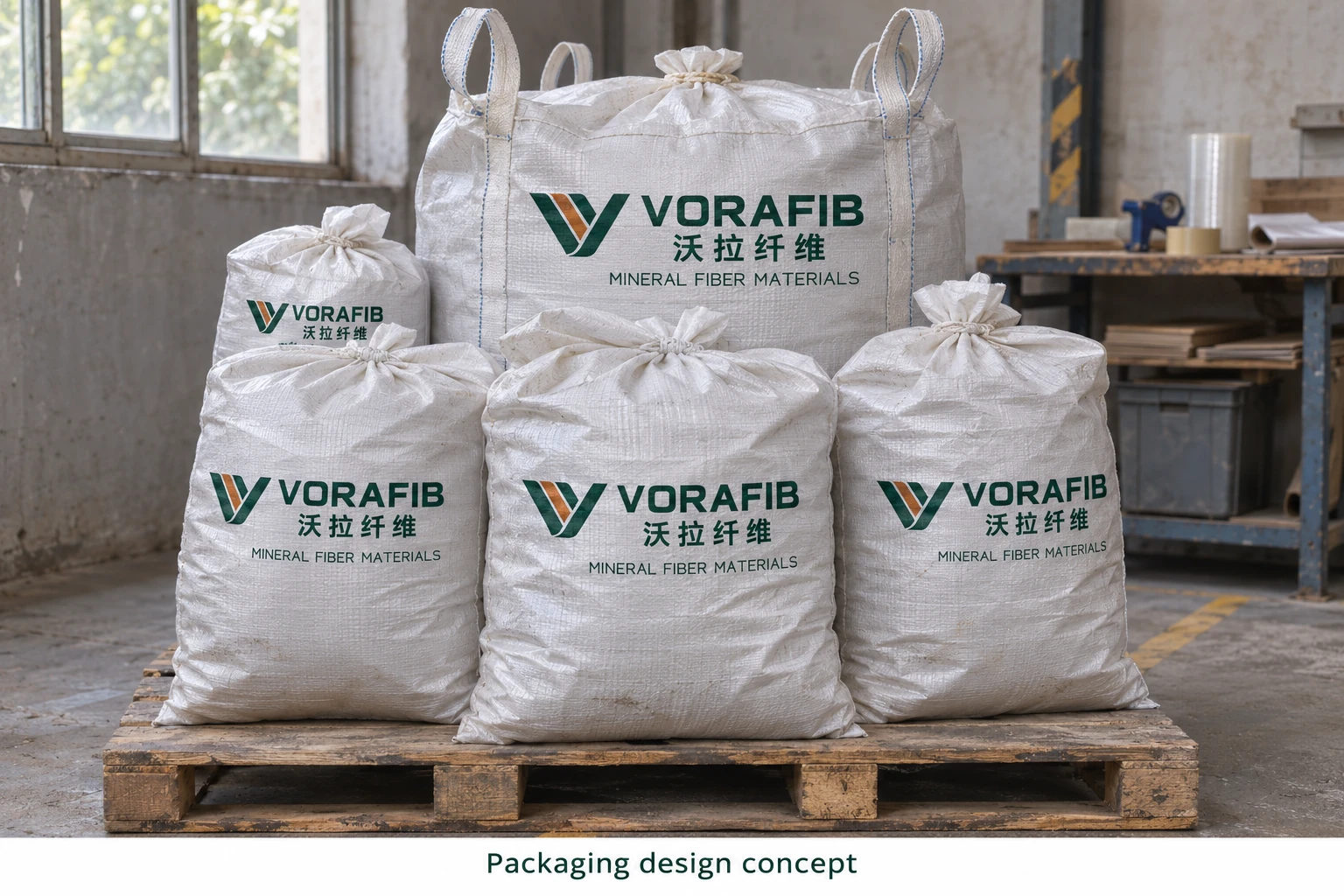
Packaging design concept
Packaging materials
Confirm packing format and quantity for the selected material.
View packaging concept ↗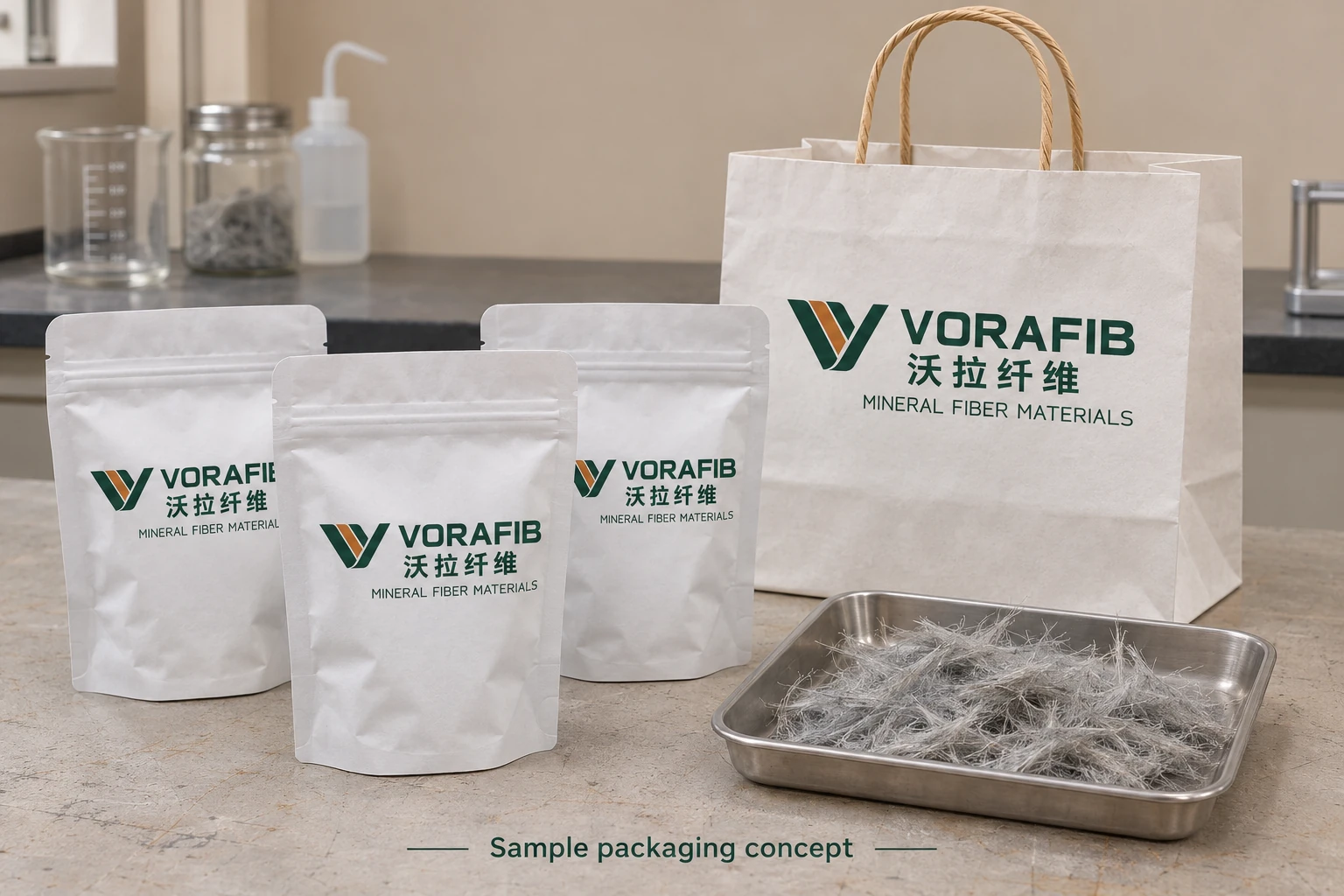
Packaging design concept
Sample identification
Keep the sample reference connected to its grade and current datasheet.
View packaging concept ↗FROM TEST RESULTS TO A SHORTLIST
Compare the limits that matter to your process.
Choose a product range and, if you have agreed limits, enter them below. This compares published catalogue limits; it does not predict performance or rank the grades.
3 catalogue grades listed.
Catalogue grades in this range
| Grade | Moisture / drying loss max. | Ignition loss max. | Shot max. | Tap density | Average length | Average diameter | Next step |
|---|---|---|---|---|---|---|---|
| MF-DBP-A | <=0.3% | <=0.5% | <=1.0% | 0.5-0.8g/cm3 | 100-250um | 3-10um | View specificationsDiscuss this range |
| MF-DBP-B | <=0.3% | <=0.3% | <=0.5% | 0.5-0.8g/cm3 | 100-250um | 3-10um | View specificationsDiscuss this range |
| MF-DBP-C | <=0.5% | <=4.0% | <=1.0% | 0.4-0.7g/cm3 | 100-250um | 5-12um | View specificationsDiscuss this range |
Compare like with like.
The result is a catalogue-limit shortlist, not a measured batch result or an approval for your application. Blank inputs apply no filter. Missing upper limits never count as zero or automatically satisfy an entered limit.
Confirm the moisture and ignition-loss test conditions, reporting basis, shot sieve cut-off and separation method before comparing suppliers. Then obtain a current datasheet, batch information and samples, and validate mixing, forming and finished-product performance in your own formulation.
MEASUREMENT NOTES
Read the method behind the value.
Explore a topic when you need more detail. Test conditions, reporting basis and method scope matter when comparing two results.
Bulk and tapped densityUnderstand the volume a weighed fiber sample occupies before comparing handling and mixing requirements.
The principle
Bulk density includes the spaces between fibers. Mechanical tapping or vibration reduces that space; dividing sample mass by the final volume gives tapped bulk density. This is different from the true density of the solid fiber material.
Calculation reference
Tapped bulk density (g/mL) = net sample mass (g) / final tapped volume (mL)
Read the result
The equipment illustration explains the measurement concept. Confirm the cylinder, tapping program, endpoint and reporting basis for the selected grade before comparing results.
How this helps your shortlist
Shortlist grades whose reported density range suits your volumetric feeding, mixer loading and forming process. Then check actual dispersion, filling and pressed-part consistency in your formulation.
Compare like with like
Match conditioning, cylinder size, filling technique, tap rate, movement, number of taps and endpoint. Confirm what “Apparent Density” means on the current grade datasheet.
Typical measurement workflow
- Take a representative portion and weigh its net mass using a clean, dry graduated cylinder.
- Fill consistently and record the initial volume if a loose-fill result is required. Do not describe a vibrated result as loose-fill density.
- Run the agreed tapping program and read the settled volume at the defined endpoint.
- Repeat using the agreed sampling plan and report the result. Record whether repetitions use the same portion or independently filled portions.
Keep in mind
A higher density does not establish stronger fibers, a higher friction coefficient or better sealing. Compare like-for-like packing methods.
Background references
USP: bulk and tapped density principles (opens in a new tab)Fiber length and diameterCompare fiber geometry on a stated measurement basis, then balance reinforcement with dispersion.
The principle
Optical microscopy or a calibrated projection system measures individual dispersed fibers. The sample preparation, counting rule and averaging method affect the result; an average alone does not describe the full size distribution.
Calculation reference
Number-average length = sum of measured lengths / number of fibers measured
Read the result
The method illustration shows measurement principles. Confirm the optical method, units and sampling basis on the current datasheet; it does not identify an installed analyzer.
How this helps your shortlist
Use the catalogue length and diameter ranges to identify candidates for your mixing and reinforcement needs. Check clumping, dispersion and fiber retention after processing before selecting a grade.
Compare like with like
Distinguish number averages, length-weighted averages and distribution percentiles. Ask whether measurements describe the supplied fibers or fibers recovered after processing.
Typical measurement workflow
- Collect representative portions from several positions so the test is not dominated by one clump. Agree the sampling plan before measurement.
- Disperse the fibers gently on slides using the specified mounting medium. Avoid preparation that unnecessarily breaks fibers.
- Calibrate the optical scale, then measure length and diameter using a documented counting rule. Agree the minimum fiber count per slide and per sample before comparing results.
- Report the number measured, units, average type and, when available, the distribution. Convert units explicitly: 1 mm = 1,000 µm.
Keep in mind
Longer is not automatically better. Do not divide unrelated range endpoints and describe the result as a measured average aspect ratio, or predict finished-brake performance from dimensions alone.
Moisture, drying loss and ignition lossSeparate low-temperature drying loss from the mass change measured during a higher-temperature ignition test.
The principle
Both procedures weigh a sample before and after heating. Drying loss can include substances other than water. Ignition loss records the net mass change under a specified furnace program; coatings, organic components and mineral reactions can all affect it.
Calculation reference
Loss (%) = (net starting mass − net mass after the specified treatment) / net starting mass × 100
Read the result
The diagram separates the two mass-change measurements. Confirm the actual temperatures, hold times and acceptance limits with the selected grade’s current documentation.
How this helps your shortlist
Use agreed moisture and ignition-loss limits to narrow the catalogue, then investigate compatibility with your drying, hot pressing and curing process. A coated or composite fiber may intentionally have a different ignition loss.
Compare like with like
Confirm temperature, hold time, atmosphere, drying history, constant-mass criterion and reporting basis. A water-specific method may be needed if non-water volatiles interfere.
Typical measurement workflow
- Agree the sample preparation and test method. Tare the sample container or crucible and weigh the net sample mass.
- For drying loss, use the agreed temperature, duration and endpoint. Cool as required by the method before weighing.
- For ignition loss, use the agreed furnace program, atmosphere and cooling procedure, then weigh the residue.
- Calculate each loss against its stated starting mass. Record repetitions and whether ignition loss is reported as received or on a pre-dried basis.
Keep in mind
Ignition loss is not a maximum service temperature, fire rating or direct measurement of organic content. A lower value is not universally a better grade.
Non-fibrous shot contentMeasure a defined separated fraction of non-fibrous particles, with the sieve cut-off stated alongside the result.
The principle
Shot consists of non-fiberized mineral particles. An agreed separation method isolates a defined non-fibrous fraction, which is dried and weighed. The separation route and sieve opening affect the result.
Calculation reference
Shot content (%) = dry retained shot mass / agreed reference sample mass × 100
Read the result
The diagram is a conceptual workflow. Wet separation and dry sieving are different methods; a comparable result requires the same method, sieve cut-off and mass basis.
How this helps your shortlist
Compare shot limits at the same particle-size cut-off and method, then assess the chosen fiber in your friction or sealing formulation. Particle content can be relevant to the formulation’s wear and surface-behavior requirements.
Compare like with like
A result for particles above 125 µm cannot be directly compared with one above another sieve size. Ask whether the denominator is the as-received mass or the mass after binder removal.
Typical measurement workflow
- Prepare a representative sample and define the reference mass. Agree whether any binder removal or other pretreatment is required.
- Separate the fibers and non-fibrous fraction using the agreed method. Record whether the process uses wet separation or dry sieving.
- Collect the defined fraction with the specified sieve and record its opening and any additional treatment.
- Dry and weigh the recovered fraction using the agreed endpoint. Record treatment losses and calculate on the agreed reference-mass basis.
Keep in mind
Shot is not simply a generic “impurity” value, and the lowest percentage does not by itself establish the best finished-product performance.
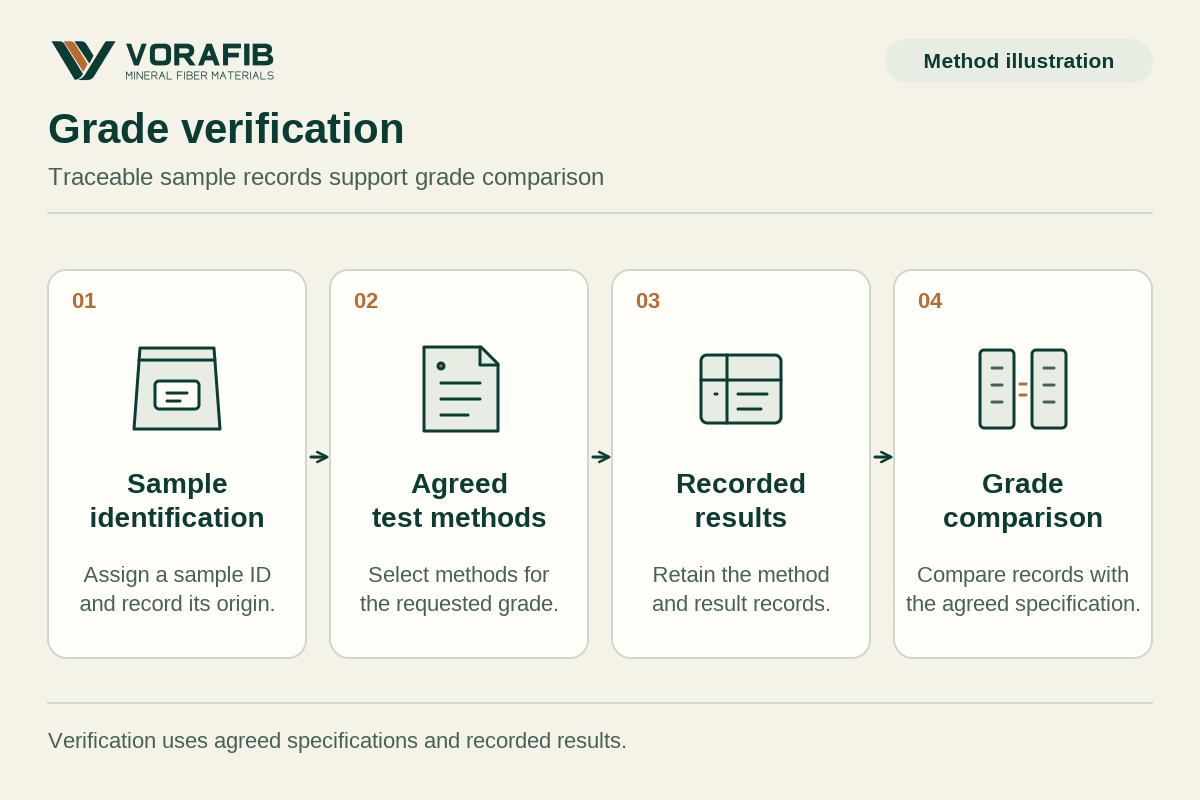
Grade verification frameworkVerify the selected gradeConnect the selected grade’s current datasheet, agreed methods and sample validation before ordering.
The principle
A useful grade comparison identifies the property, units, measurement method and reporting basis. Keep catalogue reference values separate from agreed acceptance limits and batch-specific documentation.
Calculation reference
Useful comparison = same property + same units + same method + same reporting basis
Read the result
Use the verification workflow and existing catalogue table as a starting point. Request current documentation for the selected grade and connect each result to its sample reference.
How this helps your shortlist
Combine geometry, packing, moisture, ignition loss, shot and composition requirements. Use the catalogue selector on this page to narrow candidates, then confirm methods and validate samples in the complete formulation.
Compare like with like
For brake applications, agree the required friction, wear and noise testing of the finished component. For sealing, agree the relevant leakage, compression/recovery and media-compatibility checks.
Typical measurement workflow
- Choose the relevant mineral-fiber product family and open its grade-comparison table.
- Keep a typical value, a broad family range and a specified maximum distinct. Confirm the applicable measurement method and units.
- For composition entries such as SiO₂ or Al₂O₃, ask for the current analysis basis and method.
- Request the current datasheet and the agreed batch documentation for the shortlisted grade. A blank or “not specified” entry is not zero.
Keep in mind
A catalogue reference value does not replace a batch certificate, an agreed specification or validation in the intended formulation.
Background references
ROCKWOOL: material consistency in friction formulations (opens in a new tab)Sources & scope of reference
These references explain measurement principles and their scope. They do not imply that a photographed procedure or a supplied product is certified to a listed standard.
- USP: bulk and tapped density principles (opens in a new tab)
- ISO 1888: fiber-diameter measurement (textile-glass scope) (opens in a new tab)
- METTLER TOLEDO: loss-on-drying measurement (opens in a new tab)
- ASTM D7348: ignition-loss principles and limitations (combustion-residue scope) (opens in a new tab)
- ASTM C1335: non-fibrous content (rock/slag insulation scope) (opens in a new tab)
- GB/T 5480-2017: mineral-wool test methods (opens in a new tab)
- ROCKWOOL: material consistency in friction formulations (opens in a new tab)
A photograph is not a batch report or an accreditation statement. Confirm the selected grade, current specifications and applicable methods before ordering.